


A building can be strong, well finished, and carefully painted. But if water is not managed properly around it, the property can still suffer. Water can collect near the foundation. It can damage compound walls. It can enter low plinth areas. It can create dampness in walls. It can weaken external surfaces. It can make parking areas muddy. It can damage paver blocks. It can make sports grounds unusable after rain. It can create repeated maintenance costs.
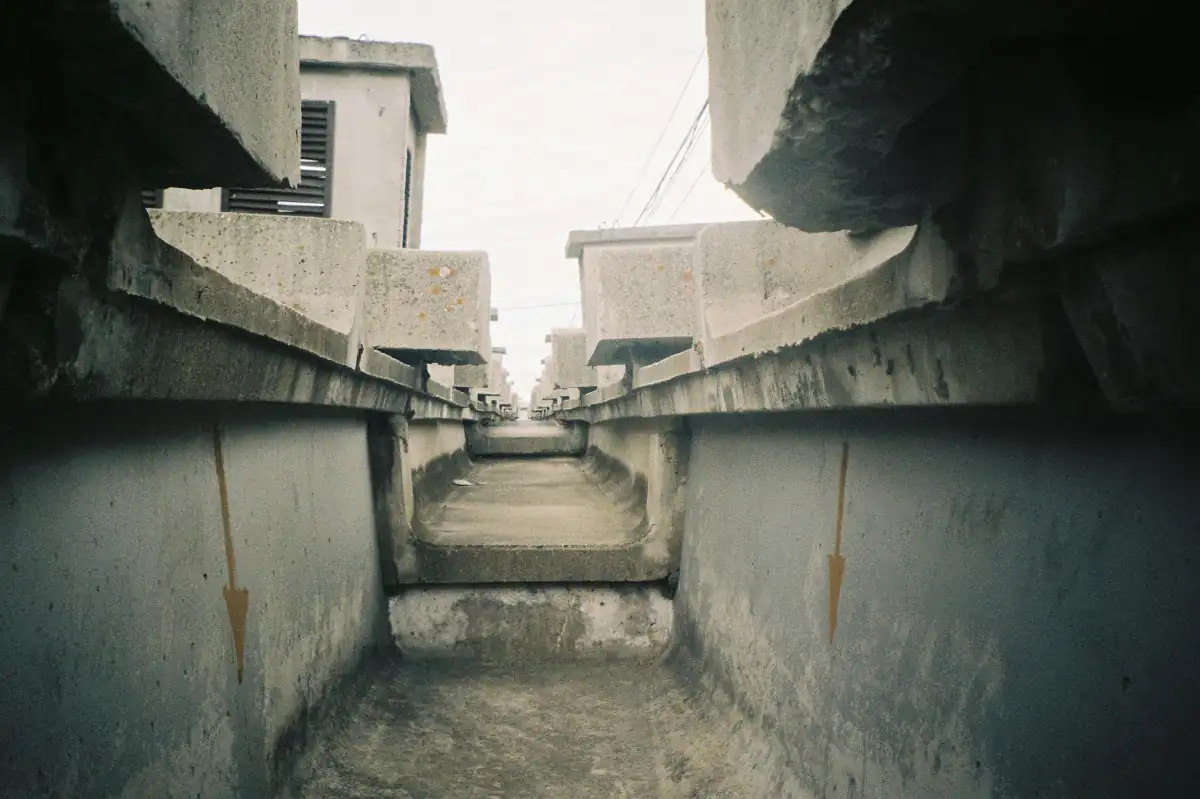
A building can be strong, well finished, and carefully painted. But if water is not managed properly around it, the property can still suffer.
Water can collect near the foundation. It can damage compound walls. It can enter low plinth areas. It can create dampness in walls. It can weaken external surfaces. It can make parking areas muddy. It can damage paver blocks. It can make sports grounds unusable after rain. It can create repeated maintenance costs.
This is why drainage and site development should never be treated as leftover work.
For homes, farmhouses, institutions, campuses, commercial sites, sports grounds, and open plots in Kolhapur and Panhala, water movement is one of the most important construction decisions. The building must be protected not only from above, but also from the ground around it.
A durable property is not built only with RCC, brickwork, plaster, and paint. It is also built with correct site levels, proper drainage, RCC gutters, water exits, compound wall planning, paver block slope, and external development.
This guide explains why drainage and site development matter before, during, and after construction.
Drainage should be planned before construction starts
Drainage is often discussed too late.
Many clients start thinking about water flow only after the first monsoon creates a problem. By then, the building may already be complete, paver blocks may be laid, compound walls may be finished, and external levels may be difficult to correct.
The better approach is to study drainage before construction begins.
Before starting work, the construction team should understand:
- Where rainwater enters the site
- Where water naturally flows
- Where water should exit
- Whether the plot is lower than the road
- Whether neighbouring land sends water toward the site
- Whether the compound wall will block water
- Whether an RCC gutter is needed
- Whether surface drains are required
- Whether paver blocks need slope correction
- Whether the foundation area needs protection
- Whether water may collect near the plinth
- Whether the site needs levelling or filling
Good drainage planning prevents many future repairs.
A site should not be made flat without understanding water movement. Water must always be given a direction.
Site levels decide how water behaves
Site level is one of the most important parts of external development.
Even a small level mistake can decide whether water moves away from the building or collects near it.
Before construction, the team should check:
- Road level
- Plot level
- Plinth level
- Neighbouring property level
- Gate level
- Compound wall base level
- Parking level
- Paver block level
- Drainage outlet level
- Ground slope
- Water exit direction
- Foundation-side levels
If the road is higher than the plot, water may enter the property during rain. If the plinth is too low, water may come close to the house. If paver blocks slope toward the building, water may collect at the entrance. If the compound wall blocks the natural water path, the property may face waterlogging.
A good construction company studies levels before finishing the site.
Site development is not just making the land look clean. It is making the land work correctly.
Why drainage matters in Kolhapur and Panhala
Kolhapur and Panhala construction projects should be planned with monsoon conditions in mind.
Kolhapur has civic-level drainage and waterlogging concerns during the rainy season. Public reporting around KMC’s monsoon preparedness has repeatedly referred to nullah cleaning, drain cleaning, silt removal, and flood-prone areas.
For private properties, the lesson is direct: water needs a route.
A home, farmhouse, institution, or commercial site may not be responsible for city drainage, but it must manage water within its own boundary.
In Panhala and nearby sloping areas, drainage becomes even more important because natural land levels can send water across the site quickly. A farmhouse or open plot may appear dry in summer but behave differently during heavy rain.
Local construction planning should therefore include drainage from the beginning.
RCC gutters help control water movement
RCC gutters are used to collect and carry water away from a site or specific area.
They are useful in many types of projects:
- Sports grounds
- Campus development
- Farmhouses
- Institutional sites
- Compound wall edges
- Internal roads
- Parking areas
- Commercial sites
- Open plots
- Residential external development
- Agricultural college or campus areas
But an RCC gutter works only when it is planned correctly.
Important RCC gutter checks include:
- Correct location
- Proper slope
- Adequate size
- Strong concrete work
- Smooth internal surface
- Connection to outlet
- Safe discharge point
- Cleaning access
- Protection from silt blockage
- Coordination with site levels
- Coordination with compound wall
- Safety near walking areas
- Long-term maintenance access
A gutter that does not slope correctly will hold water. A gutter without an outlet will fail. A gutter that cannot be cleaned will block over time.
RCC gutter work should be treated as functional infrastructure, not just an edge detail.
Surface drainage and stormwater drainage are different from sewage
Many property owners confuse drainage with sewage.
- Stormwater drainage deals with rainwater and surface runoff.
- Sewage drainage deals with wastewater from toilets and bathrooms.
- Plumbing drainage deals with internal used water from kitchens, bathrooms, and utility areas.
These systems should be planned separately and correctly.
For site development, stormwater drainage may include:
- Open drains
- RCC gutters
- Surface slope
- Rainwater outlets
- Roadside drains
- Compound wall openings
- Paver block slope
- Ground channels
- Perimeter drainage
- Water exit points
- Gutter connections
Stormwater should not be allowed to mix casually with wastewater systems unless a proper approved system allows it. Poor planning can create hygiene problems, blockages, smells, and maintenance issues.
A good site development plan understands the difference between water types and routes them properly.
Foundation protection starts outside the building
A strong foundation can still suffer if water keeps collecting around it.
Water near the foundation can create dampness, soil movement, settlement risk, and long-term maintenance problems. Even if the structural design is good, poor external water management can create avoidable stress around the building.
Foundation protection should consider:
- Plinth height
- Ground slope away from building
- Rainwater discharge
- Terrace outlet direction
- Drainage around the building
- No water stagnation near walls
- Paver block slope away from structure
- Proper backfilling
- External surface levels
- Compound wall water openings
- RCC gutter placement
- Maintenance access
The area around the building should not behave like a water container.
Water should move away from the structure in a controlled way.
Compound walls can create drainage problems if not planned
A compound wall protects the property, defines the boundary, and improves security. But it can also block natural water movement.
This is especially important for:
- Farmhouses
- Sloping plots
- Large campuses
- Sports grounds
- Institutional properties
- Open land
- Plots lower than surrounding land
- Sites with long boundary walls
Before building a compound wall, the construction team should check:
- Where water enters the plot
- Where water should exit
- Whether the wall blocks natural flow
- Whether weep holes or openings are needed
- Whether an RCC gutter is needed inside the wall
- Whether water from outside may press against the wall
- Whether soil level differs on both sides
- Whether the wall behaves partly like a retaining wall
- Whether gate level will create water entry
A wall without drainage planning can trap water and damage itself.
If a compound wall holds soil or faces water pressure, drainage openings or weep holes may be needed. Retaining-wall references commonly describe weep holes as a way to relieve water buildup and reduce pressure behind walls.
A compound wall should protect the property without trapping water inside it.
Paver block work must include slope planning
Paver blocks are often used for entrances, parking areas, pathways, internal roads, and external open spaces.
But paver blocks are not only a surface finish.
They need a properly prepared base and correct slope.
Important paver block checks include:
- Sub-base preparation
- Compaction
- Surface slope
- Water exit direction
- Edge restraint
- Joint filling
- Drainage connection
- Load requirement
- Parking use
- Gate level
- Building entrance level
- Maintenance access
If paver blocks are laid flat without slope, water will collect. If the base is weak, blocks will settle. If the edge is not restrained, blocks may shift. If water flows toward the building, dampness and inconvenience may follow.
Paver block work should be coordinated with drainage and site levels.
A good-looking surface is not enough. It must drain correctly.
Drainage for farmhouses
Farmhouse drainage needs special attention because the property is often open to natural water movement.
A farmhouse near Panhala or Kolhapur may have slope, fields, open soil, approach roads, compound walls, and large external areas. During heavy rain, water may move from neighbouring land or higher ground.
Farmhouse drainage planning should consider:
- Natural slope
- Approach road drainage
- Compound wall openings
- Gate level
- Water around plinth
- Parking surface
- RCC gutter requirement
- Roof water discharge
- Water tank overflow
- Garden drainage
- Outdoor seating area drainage
- Pathway slope
- Maintenance access
- Soil erosion control
A farmhouse may look calm in dry weather, but monsoon reveals the quality of site planning.
Good farmhouse construction includes water movement from the beginning.
Drainage for residential homes
Residential drainage protects daily comfort and long-term durability.
For homes in Kolhapur and Panhala, drainage planning should include:
- Plinth height
- Bathroom drainage
- Terrace rainwater outlet
- Kitchen wastewater route
- External surface slope
- Parking area drainage
- Compound wall drainage
- Water tank overflow
- Paver block slope
- Roadside water entry
- Front gate level
- Backyard water movement
- Foundation-side water protection
Water should not collect near the entrance, parking area, external walls, or foundation.
Many dampness problems in homes are connected to water outside the building, not only leakage inside the building.
A well-built house needs a well-drained site.
Drainage for institutions and campuses
Institutional sites need stronger drainage planning because many people use the property daily.
A college, hospital, school, campus, or sports facility may include buildings, roads, pathways, parking areas, playgrounds, compound walls, water tanks, and open grounds.
Institutional drainage should consider:
- Student or visitor movement
- Emergency vehicle access
- Internal roads
- Sports grounds
- Compound walls
- RCC gutters
- Water tank overflow
- Parking areas
- Pedestrian pathways
- Toilet block drainage
- Stormwater outlets
- Maintenance cleaning access
- Low-lying areas
- Future expansion zones
Poor drainage in an institution can create safety issues, waterlogging, inconvenience, and repeated maintenance.
JVS Enterprises has experience with institutional site-related works such as football ground development with RCC gutter, sports complex work, compound wall work, and water tank construction. These are all connected to external site planning.
A campus should be developed as a system, not as separate pieces.
Drainage for sports grounds
Sports grounds are highly sensitive to drainage.
A ground may look ready after levelling, but if it holds water after rain, it becomes difficult or unsafe to use.
Sports ground drainage should consider:
- Ground slope
- Surface water flow
- RCC gutter location
- Peripheral drainage
- Outlet connection
- Low patch correction
- Sub-base preparation
- Soil type
- Boundary wall effect
- Maintenance access
- Silt cleaning
- Surface repair after monsoon
The D.Y. Patil Agriculture College football ground with RCC gutter project in the JVS portfolio is a good example of why drainage is central to ground development.
A sports ground is only useful when it remains usable after weather changes.
Site development should be budgeted early
Many projects exceed the expected cost because site development is ignored in the beginning.
The main building may be completed, but the property still needs:
- Drainage
- RCC gutter
- Compound wall
- Paver blocks
- Gate work
- Approach road
- Parking area
- Water tank support
- Site levelling
- Filling
- External lighting coordination
- Ground development
- Post-construction cleaning
If these items are not included in the budget, the client may face unexpected costs later.
A complete estimate should separate:
- Main building cost
- External development cost
- Drainage cost
- Compound wall cost
- Water tank cost
- Paver block or pavement cost
- Site levelling and filling cost
This makes planning more realistic.
A property is not complete until the site around it works properly.
Drainage should be coordinated with waterproofing
Waterproofing and drainage are connected.
Waterproofing protects surfaces from water entry. Drainage removes water from where it should not stay.
If drainage is poor, waterproofing has to work harder. If waterproofing is poor, drainage alone cannot protect the structure.
Important connected areas include:
- Terrace outlets
- Bathroom floor slope
- Water tank overflow
- Balcony drainage
- External wall protection
- Plinth area
- Foundation-side water
- Parking slope
- Paver block water flow
- Compound wall drainage
- RCC gutter discharge
A building should not depend only on waterproofing coatings. It should be designed so water does not remain in damaging locations.
The best water protection combines slope, drainage, waterproofing, and maintenance.
Maintenance access is part of drainage planning
A drainage system will need cleaning.
Leaves, silt, plastic, soil, and debris can block gutters and drains. A system that cannot be cleaned will eventually fail.
Maintenance planning should include:
- Accessible gutter lines
- Cleanable RCC gutters
- Openable drain covers
- Visible outlets
- No hidden blockages
- Silt traps where needed
- Safe cleaning points
- Clear discharge route
- No permanent obstruction over drains
- Post-monsoon inspection
- Pre-monsoon cleaning
Kolhapur civic reporting around drain and nullah cleaning shows the importance of regular maintenance before monsoon. The same principle applies at the property level.
Drainage is not a one-time construction item. It is a system that must remain open and functional.
Common drainage and site development mistakes
Many property problems begin with avoidable site development mistakes.
Mistake 1: Planning drainage after construction
Drainage should be planned before foundation, compound wall, paver blocks, and external development work are completed.
Mistake 2: Making the site flat
A site needs proper slope. A flat-looking surface can still collect water if levels are not planned.
Mistake 3: Letting water move toward the building
External surfaces should direct water away from the structure.
Mistake 4: Building compound walls without water openings
A wall can trap water if natural water flow is blocked.
Mistake 5: Poor RCC gutter slope
A gutter without proper slope and outlet connection will not remove water effectively.
Mistake 6: Ignoring road level
If the road is higher than the plot, water entry must be planned for.
Mistake 7: Laying paver blocks without base preparation
Weak base preparation leads to settlement, uneven surfaces, and water pockets.
Mistake 8: Ignoring water tank overflow
Overflow should be discharged safely, not onto walls, foundations, or terraces.
Mistake 9: Not providing maintenance access
A drainage system that cannot be cleaned will block over time.
Mistake 10: Treating external development as decoration
External development is functional infrastructure. It protects the property.
Quality checklist for drainage and site development
Property owners can use this checklist before starting external development:
- Is the road level checked?
- Is the plot level checked?
- Is the plinth height suitable?
- Is water flow direction understood?
- Is the discharge point identified?
- Is an RCC gutter required?
- Is the gutter slope planned?
- Is the compound wall blocking water?
- Are water openings or weep holes needed?
- Is paver block slope planned?
- Is the sub-base compacted?
- Is parking drainage considered?
- Is water tank overflow planned?
- Is terrace water discharge connected properly?
- Is foundation-side water controlled?
- Is maintenance access available?
- Is pre-monsoon cleaning possible?
- Is external development included in the budget?
This checklist helps clients understand whether site development is being handled seriously.
Choosing a contractor for drainage and site development
Drainage work should not be given to a contractor who only sees it as simple gutter work.
A good contractor should understand site levels, water flow, foundation protection, compound walls, paver blocks, RCC work, and external development together.
Before choosing a contractor, ask:
- Will the site levels be checked?
- Will water flow be studied before work starts?
- Will the RCC gutter have proper slope?
- Where will water discharge?
- Will the compound wall block water?
- Are drainage openings needed?
- Will paver blocks slope correctly?
- Is base preparation included?
- Is maintenance access planned?
- Is monsoon use considered?
- Can the contractor handle RCC work, compound wall, paver blocks, and site development together?
Drainage is connected work.
The contractor should understand the whole site, not only one line of gutter.
JVS Enterprises and drainage/site development work
JVS Enterprises provides drainage work, RCC gutter work, site development, paver block work, compound wall construction, water tank construction, residential construction, farmhouse construction, institutional construction, renovation, and turnkey construction services in Kolhapur and Panhala.
The company’s project portfolio includes:
- D.Y. Patil Agriculture College, Talsande — Football Ground with RCC Gutter
- D.Y. Patil, Kadamwadi, Kolhapur — Sports Complex
- D.Y. Patil Hospital, Kadamwadi — Compound Wall
- D.Y. Patil Agriculture College, Talsande — 8000-litre Water Tank
- Residential houses and farmhouses requiring external development
This experience matters because drainage is rarely isolated.
- A sports ground needs levels and gutters.
- A compound wall needs water openings.
- A water tank needs overflow planning.
- A farmhouse needs approach and site drainage.
- A residence needs foundation-side water protection.
- An institution needs campus drainage and safe movement.
A construction company that understands these connections can plan the site more responsibly.
Final thoughts
Drainage is not the most glamorous part of construction.
But it is one of the most important.
A property can have good RCC work, attractive finishes, strong compound walls, and clean external surfaces. Yet if water is not managed properly, the property may face dampness, waterlogging, wall damage, foundation-side issues, surface settlement, and repeated repair costs.
For Kolhapur and Panhala, drainage, gutters, and site development should be planned with local rainfall, site levels, road levels, slope, compound walls, and maintenance in mind.
A durable property is not only built upward.
It is also planned around how water moves across the ground.
Frequently asked questions
Why is drainage important in construction?
Drainage is important because uncontrolled water can damage foundations, walls, compound walls, paver blocks, parking areas, sports grounds, and external surfaces. Good drainage directs rainwater away from sensitive areas and reduces long-term maintenance.
What is RCC gutter work?
RCC gutter work involves constructing reinforced cement concrete channels to collect and carry rainwater or surface water away from a site. RCC gutters are commonly used in campuses, sports grounds, farmhouses, roadsides, parking areas, and external development projects.
When should drainage be planned?
Drainage should be planned before construction starts, especially before foundation work, compound wall construction, paver block work, and final external development. Late drainage planning can create rework and higher cost.
Why do paver blocks sink or collect water?
Paver blocks may sink or collect water if the sub-base is weak, compaction is poor, slope is incorrect, edge restraint is missing, or drainage is not planned. Paver block work should include proper base preparation and water-flow direction.
Do compound walls need drainage openings?
Compound walls may need drainage openings, weep holes, or nearby gutters if they block natural water flow or retain soil. This is especially important on sloping sites, farmhouses, large plots, and properties where water collects near the wall.
Does JVS Enterprises handle drainage and site development work in Kolhapur?
Yes. JVS Enterprises handles drainage work, RCC gutter construction, site development, paver block work, compound wall construction, water tank construction, sports ground development, farmhouse external development, residential construction, and institutional construction in Kolhapur, Panhala, and nearby areas.
Need help turning this insight into a practical project plan?
JVS Enterprises provides drainage work, RCC gutter construction, site levelling, paver block work, compound wall drainage, water tank overflow planning, farmhouse site development, institutional external development, sports ground development, residential construction, and turnkey construction services.
Start a Project Conversation