


A property is not complete when the building is complete. The spaces around the building decide how the property functions every day. Roads, pathways, drainage, open grounds, compound walls, paver blocks, gutters, water flow, parking areas, sports grounds, and external surfaces all affect usability.
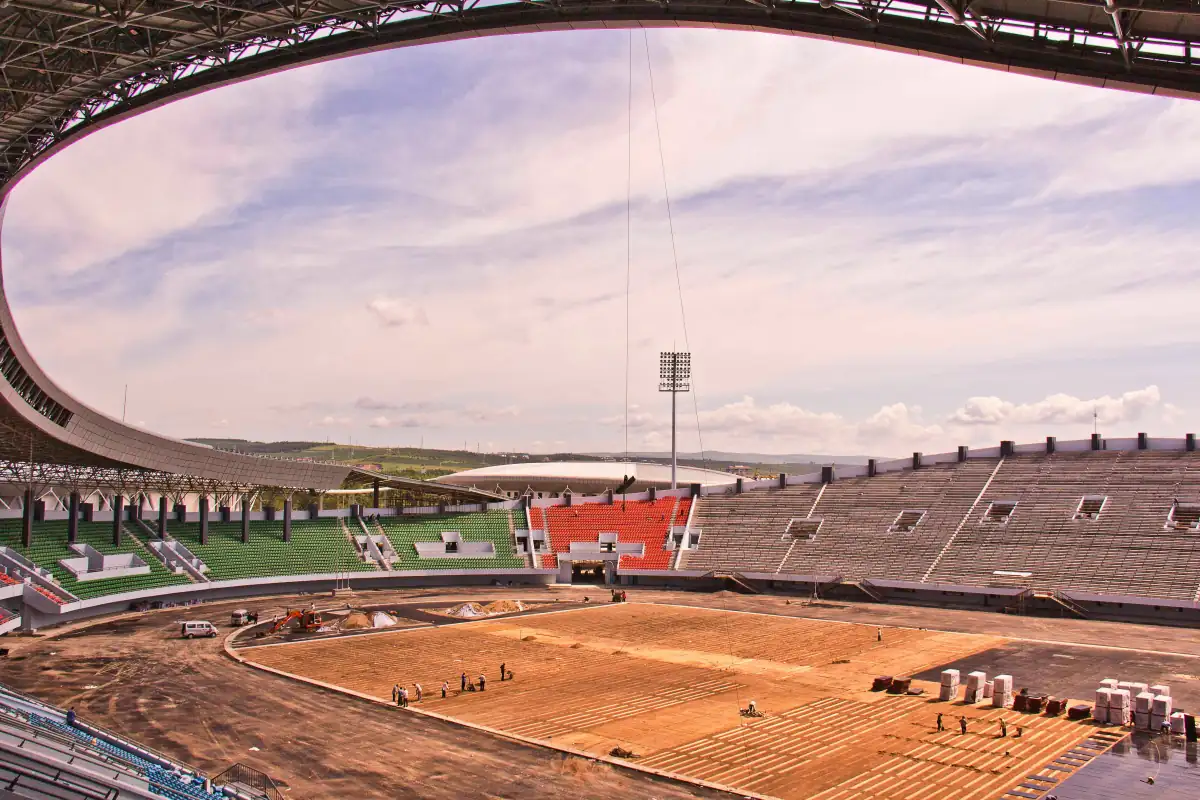
A property is not complete when the building is complete.
The spaces around the building decide how the property functions every day. Roads, pathways, drainage, open grounds, compound walls, paver blocks, gutters, water flow, parking areas, sports grounds, and external surfaces all affect usability.
For schools, colleges, hospitals, campuses, farmhouses, commercial properties, and residential sites, external development is not secondary work. It is the infrastructure that supports movement, safety, drainage, maintenance, and long-term use.
Sports ground construction needs even more discipline. A football ground, sports complex, or open play area may look simple after completion, but its performance depends on what is built below and around it: levels, sub-base, drainage, slopes, water outlets, boundary treatment, and surface preparation.
For clients in Kolhapur and Panhala, this matters because monsoon conditions, ground levels, water movement, and site access can affect the life of external spaces.
This guide explains how sports ground and external development work should be planned beyond the main building.
External development is part of the property, not an afterthought
Many projects focus most of the budget and attention on the main building.
That is understandable. The building is the most visible part of the project. But the surrounding site decides how people enter, move, park, play, drain water, maintain the property, and use open spaces.
External development may include:
- Site clearing
- Excavation
- Ground levelling
- Internal roads
- Paver block work
- RCC pavement
- Parking areas
- Compound walls
- Boundary gates
- Drainage lines
- RCC gutters
- Storm-water movement
- Sports ground development
- Football ground preparation
- Open ground levelling
- Pathways
- Water tank support areas
- External lighting coordination
- Post-construction cleaning
If these works are not planned properly, the property may face waterlogging, muddy access, uneven movement, damaged compound walls, poor ground usability, and repeated maintenance costs.
A good construction company should look at the full site, not only the structure.
Sports ground construction begins with ground understanding
A sports ground is not only an open field.
It is a prepared surface designed for movement, water control, safety, and repeated use. Whether the surface is natural soil, grass, turf, or another finish, the ground below it must be studied first.
Before planning a sports ground, the construction team should check:
- Existing ground level
- Slope direction
- Soil condition
- Waterlogging areas
- Surrounding land level
- Access for machines
- Existing drainage path
- Need for filling or cutting
- Sub-base condition
- Boundary requirement
- User movement
- Maintenance access
- Nearby buildings
- Rainwater discharge point
- Future use of the ground
A football ground or sports area that is not levelled and drained properly may become difficult to use after rain. Surface repairs may become frequent. Water may collect in low areas. The ground may become unsafe for players.
Sports ground construction should therefore begin with land reading and level planning.
Levelling is one of the most important stages
Levelling decides how the ground behaves.
A sports ground should not be randomly flattened. It should be shaped so that water can move away from the playing area without creating discomfort, erosion, or uneven use.
Levelling work should consider:
- Existing slope
- Required playing surface
- Water exit direction
- Surrounding road level
- Neighbouring land level
- Drainage outlet
- Filling material
- Compaction
- Surface tolerance
- Future turf or grass layer
- Boundary height
- Access paths
- Maintenance movement
For sports grounds, even small level mistakes can create visible problems. A low patch may collect water. A high patch may affect play. Poor compaction may create settlement later.
Ground levelling is not only earthwork. It is performance preparation.
Drainage decides whether the ground remains usable
Drainage is one of the most important parts of sports ground construction.
A sports ground without drainage may look complete during dry weather, but it can fail during monsoon or after repeated rain.
Good drainage planning should answer:
- Where will rainwater fall?
- Where will surface water move?
- Will water collect in the centre?
- Is the ground sloped correctly?
- Is an RCC gutter required?
- Is a peripheral drain required?
- Is sub-surface drainage needed?
- Where will water discharge safely?
- Will nearby land send water into the ground?
- Will the compound wall block water flow?
- Will silt or debris clog the drain?
- Can the drain be cleaned later?
Drainage should be designed before finishing the ground surface.
In Kolhapur, where waterlogging and storm-water management are real civic concerns, ground drainage should not be treated casually. A sports facility, campus ground, or open development area must be prepared for seasonal water movement.
A ground that drains well remains more usable, safer, and easier to maintain.
RCC gutter work should be planned with slope and maintenance
RCC gutters are often used in external development and sports ground projects to carry water away from the site.
But an RCC gutter is useful only when it is properly aligned, sloped, connected, and maintainable.
Important RCC gutter checks include:
- Correct location
- Water entry points
- Slope direction
- Gutter size
- Concrete quality
- Side wall strength
- Base finish
- Outlet connection
- Cleaning access
- Protection from silt
- Compatibility with ground levels
- Safety around walking areas
- Connection to external drainage
- Avoiding stagnant water
A gutter that is too shallow, wrongly sloped, or poorly connected may not solve the water problem. It may simply move the problem to another part of the site.
JVS Enterprises has handled football ground development with RCC gutter work for D.Y. Patil Agriculture College, Talsande, based on the project portfolio provided. This type of work is important because sports grounds depend heavily on water movement and edge drainage.
Sub-base preparation affects long-term performance
The sub-base is the prepared layer below the final surface.
In sports ground and external development work, the sub-base supports load, helps control settlement, and assists drainage depending on the design.
A weak sub-base can lead to uneven surfaces, soft patches, waterlogging, cracks, and repeated repairs.
Sub-base preparation may involve:
- Removal of unsuitable soil
- Filling
- Layered compaction
- Stone or aggregate layers
- Sand or granular material, where suitable
- Drainage layer
- Surface grading
- Moisture control
- Testing or inspection, where needed
- Final level preparation
For a sports ground, sub-base quality affects how the surface behaves during use.
For paver blocks, roads, and pavements, sub-base quality affects whether the surface remains stable or starts sinking.
A strong visible finish depends on a properly prepared base.
External roads and pathways must support movement
In institutions, farmhouses, commercial sites, and residential layouts, external roads and pathways are used every day.
They carry people, vehicles, material movement, emergency access, maintenance teams, and visitors.
Before constructing roads or pathways, the site team should consider:
- Vehicle type
- Daily movement
- Width requirement
- Turning space
- Drainage slope
- Paver block or RCC surface
- Sub-base preparation
- Edge restraint
- Water flow
- Lighting points
- Gate alignment
- Parking connection
- Maintenance access
A road or path that is not planned properly may crack, sink, collect water, or become inconvenient to use.
For campuses and institutions, pathway planning should also consider pedestrian safety and public movement.
External movement should be planned as part of the full site layout.
Paver block work needs proper base preparation
Paver blocks are commonly used for parking areas, pathways, entrances, internal roads, and external development zones.
But paver block work is only as good as the base below it.
Important checks include:
- Subgrade preparation
- Compaction
- Sand bed or bedding layer
- Paver quality
- Interlocking pattern
- Edge restraints
- Surface slope
- Drainage direction
- Joint filling
- Load requirement
- Maintenance access
If the base is weak, paver blocks may settle unevenly. If the slope is poor, water may collect. If edge restraints are weak, blocks may spread or shift.
Paver block work should not be treated as surface decoration only. It is part of the site’s movement and drainage system.
Compound walls and ground development should be coordinated
Sports grounds and external sites often need compound walls or boundary treatment.
A compound wall helps define the property, improve security, protect the ground, and control access.
But a wall can also affect water movement.
Before constructing compound walls around sports grounds or open sites, the team should check:
- Boundary line
- Gate location
- Ground level
- Water flow
- Drainage outlets
- RCC gutter alignment
- Wall foundation
- Soil pressure
- Maintenance access
- Vehicle entry
- Security requirement
- Future expansion
A compound wall should not trap water inside the ground. If water naturally moves toward the boundary, drainage openings, gutters, or discharge points should be planned.
Ground development and boundary wall construction should be coordinated, not handled separately.
Site development for institutions and campuses
Institutional sites often need more external development than private homes.
A college campus, hospital property, school, sports complex, or training center may need roads, parking, play areas, water tanks, drainage, compound walls, footpaths, open grounds, and utility access.
Institutional external development should consider:
- Student movement
- Visitor movement
- Emergency access
- Service vehicle access
- Sports areas
- Parking
- Pedestrian pathways
- Drainage
- Water storage
- Security boundary
- Lighting
- Maintenance routes
- Future construction zones
- Open space usability
- Rainwater management
JVS Enterprises has worked on institutional and campus-related projects, including D.Y. Patil Sports Complex, D.Y. Patil Agriculture College football ground with RCC gutter, D.Y. Patil Hospital compound wall, and an 8000-litre water tank project for D.Y. Patil Agriculture College, Talsande.
This type of experience matters because institutional external work is connected. A sports ground may need drainage. Drainage may need RCC gutters. Gutters may connect to site levels. Site levels may affect roads and pathways. Pathways may affect campus movement.
A campus should be planned as a system.
Site development for farmhouses and residential properties
External development is also important for homes and farmhouses.
A farmhouse near Panhala or Kolhapur may need a compound wall, gate, approach path, paver blocks, water tank, drainage, parking area, and ground levelling before it becomes fully usable.
Residential and farmhouse external development may include:
- Site levelling
- Approach road
- Parking area
- Compound wall
- Gate work
- Drainage
- Paver blocks
- Water tank base
- External lighting coordination
- Garden preparation
- Rainwater discharge
- Post-construction cleaning
Without external development, the building may be complete but the property may remain inconvenient.
A farmhouse with poor access can become difficult during monsoon. A home with poor drainage can face water near the plinth. A parking area without proper base preparation may sink or become muddy.
External development protects the usability of the entire property.
Commercial external development requires practical circulation
Commercial sites need clear external planning because movement affects business use.
A commercial building may need parking, loading and unloading space, customer entry, staff entry, drainage, signage zones, service areas, and waste movement.
Important commercial external development checks include:
- Vehicle entry
- Customer parking
- Service vehicle access
- Footpath or walkway
- Paver block or RCC surface
- Storm-water drainage
- Compound wall or boundary
- Gate planning
- Lighting points
- Utility access
- Security
- Future expansion
- Maintenance access
Poor external planning can create daily inconvenience even if the building itself is well constructed.
For commercial properties, the outside space is part of the business experience.
Sports grounds need maintenance planning from the beginning
A sports ground will need maintenance.
The type of maintenance depends on the surface, use, drainage, and surrounding conditions.
Maintenance planning should consider:
- Drain cleaning
- Surface inspection
- Low-patch correction
- Silt removal
- Grass or turf care
- Boundary maintenance
- Water outlet cleaning
- Gutter cleaning
- Access for equipment
- Surface repair
- Vegetation control
- Rainwater inspection
- Post-monsoon maintenance
If a ground is built without maintenance access, problems become harder to solve later.
A sports ground should not only be built for opening day. It should be built for repeated use.
Safety should be considered in external development
External spaces are used by many people.
Sports grounds, pathways, parking areas, campus roads, and open spaces should be safe for daily movement.
Safety considerations include:
- Even surfaces
- No sudden level differences
- Proper drainage covers
- Safe edges around gutters
- Controlled vehicle movement
- Clear entry and exit
- Adequate lighting
- Safe compound wall edges
- Slip resistance
- Pedestrian separation
- Proper slope near entrances
- Removal of debris
- Safe access during construction
In institutions, safety becomes even more important because students, visitors, patients, staff, and maintenance teams may use the site every day.
External development should make movement easier and safer.
Common mistakes in sports ground and external development work
Many site problems begin with avoidable mistakes.
Mistake 1: Treating the ground as empty land
A sports ground needs level planning, drainage, base preparation, and long-term maintenance thinking.
Mistake 2: Ignoring drainage until after waterlogging appears
Drainage should be planned before surface finishing, not after the first monsoon problem.
Mistake 3: Poor levelling
Small level mistakes can create standing water, uneven movement, or playing-surface problems.
Mistake 4: Weak sub-base preparation
Paver blocks, pavements, and sports surfaces can settle if the base is not compacted and prepared properly.
Mistake 5: Poor RCC gutter slope
A gutter without correct slope and outlet connection may not carry water effectively.
Mistake 6: Building compound walls without water-flow planning
A wall can trap water if drainage outlets or gutters are not planned.
Mistake 7: Ignoring maintenance access
Drainage systems, grounds, and pathways need cleaning and inspection access.
Mistake 8: Planning roads and pathways after construction
External movement should be considered early so roads, parking, and pathways connect properly.
Mistake 9: Underestimating monsoon impact
Kolhapur and Panhala sites should be planned with rainwater movement in mind.
Mistake 10: Treating external work as leftover budget work
External development is part of the property’s actual usability and should be budgeted properly from the beginning.
Quality checklist for sports ground and external development
Clients can use this checklist before starting work:
- Is the site level survey or level study done?
- Is the purpose of the ground clear?
- Is the water-flow direction understood?
- Is drainage planned before surface work?
- Is an RCC gutter required?
- Is the outlet location clear?
- Is the sub-base prepared and compacted?
- Are pathways and roads planned?
- Is parking or vehicle movement considered?
- Is compound wall planning coordinated with drainage?
- Are paver blocks or pavement surfaces sloped properly?
- Is maintenance access provided?
- Are safety edges and level changes handled?
- Is post-monsoon maintenance considered?
- Is the contractor experienced in external development work?
This checklist helps clients look beyond the finished surface and understand the work that gives the site long-term value.
Why local experience matters in Kolhapur and Panhala
External development is highly local.
The same design may not work on every site. A ground in Kadamwadi, a campus in Talsande, a farmhouse near Panhala, and a residential site in Kolhapur may all need different planning because of soil, access, levels, surrounding development, and water movement.
Local experience helps the contractor understand:
- Monsoon behaviour
- Waterlogging risks
- Site access
- Material movement
- Labour coordination
- Ground levels
- Local drainage patterns
- Compound wall requirements
- Institutional site needs
- Farmhouse development needs
- Maintenance practicality
JVS Enterprises is based in Panhala and has worked on residential, farmhouse, institutional, sports-related, RCC, compound wall, water tank, drainage, and external development projects in the Kolhapur region.
For sports grounds and external development, this combination of experience is useful because the work is connected to the full site.
JVS Enterprises and sports ground development experience
Based on the project portfolio provided, JVS Enterprises has worked on:
- D.Y. Patil, Kadamwadi, Kolhapur — Sports Complex
- D.Y. Patil Agriculture College, Talsande — Football Ground with RCC Gutter
- D.Y. Patil Hospital, Kadamwadi — Compound Wall
- D.Y. Patil Agriculture College, Talsande — 8000-litre Water Tank
- Residential houses and farmhouses requiring site development
- Compound walls, RCC work, drainage work, and external finishing
This experience is relevant because sports ground and external development work require practical field understanding.
- A ground must be level.
- A level must support drainage.
- Drainage may need RCC gutters.
- Gutters must connect to outlets.
- Outlets must not damage surrounding areas.
- Boundary walls must not trap water.
- Paver blocks must sit on a strong base.
- The final site must remain usable after rain.
A construction company that understands these connections can deliver better external spaces.
Final thoughts
A building can be well constructed, but if the surrounding site is poorly planned, the property will still feel incomplete.
Sports grounds, campus roads, paver blocks, pathways, compound walls, RCC gutters, drainage systems, parking areas, and open spaces all support the daily life of a property.
- For sports grounds, proper levelling and drainage decide usability.
- For institutions, external development decides campus movement.
- For farmhouses, it decides access and maintenance.
- For commercial properties, it decides customer and vehicle flow.
- For residential sites, it decides convenience and long-term protection.
Sports ground and external development work should not be treated as the final leftover stage of construction.
It should be planned from the beginning, executed with care, and built for years of use.
Frequently asked questions
What is included in sports ground construction?
Sports ground construction may include site assessment, ground levelling, cutting and filling, sub-base preparation, drainage planning, RCC gutter work, surface preparation, boundary development, access paths, water outlets, and maintenance planning.
Why is drainage important for a sports ground?
Drainage is important because standing water can damage the playing surface, reduce usability, create unsafe conditions, and increase maintenance. Surface slope, sub-base preparation, RCC gutters, and outlet planning should be considered before the ground is finished.
What is external site development work?
External site development includes work outside the main building such as site levelling, internal roads, paver blocks, parking areas, compound walls, gates, drainage, RCC gutters, water tanks, pathways, ground development, and post-construction cleaning.
Why is levelling important in football ground development?
Levelling helps create a usable playing surface and controls rainwater movement. Poor levelling can create low patches, waterlogging, uneven play conditions, and higher maintenance costs.
Does a sports ground need RCC gutter work?
Not every sports ground needs RCC gutter work, but many grounds benefit from proper edge drainage or RCC gutters, especially where monsoon water needs to be collected and discharged safely. The requirement depends on site levels, rainfall, soil, and surrounding drainage.
Does JVS Enterprises handle sports ground and external development work?
Yes. Based on the project portfolio provided, JVS Enterprises has handled sports complex work, football ground development with RCC gutter, compound wall work, water tank construction, drainage-related work, paver block work, site development, and institutional construction in Kolhapur and nearby areas.
Need help turning this insight into a practical project plan?
JVS Enterprises provides football ground development, sports ground work, RCC gutter construction, drainage work, site levelling, paver block work, compound wall construction, water tank construction, institutional site development, farmhouse external development, and turnkey construction services.
Start a Project Conversation