


A water tank looks like a simple structure. But in construction, it carries a serious responsibility.
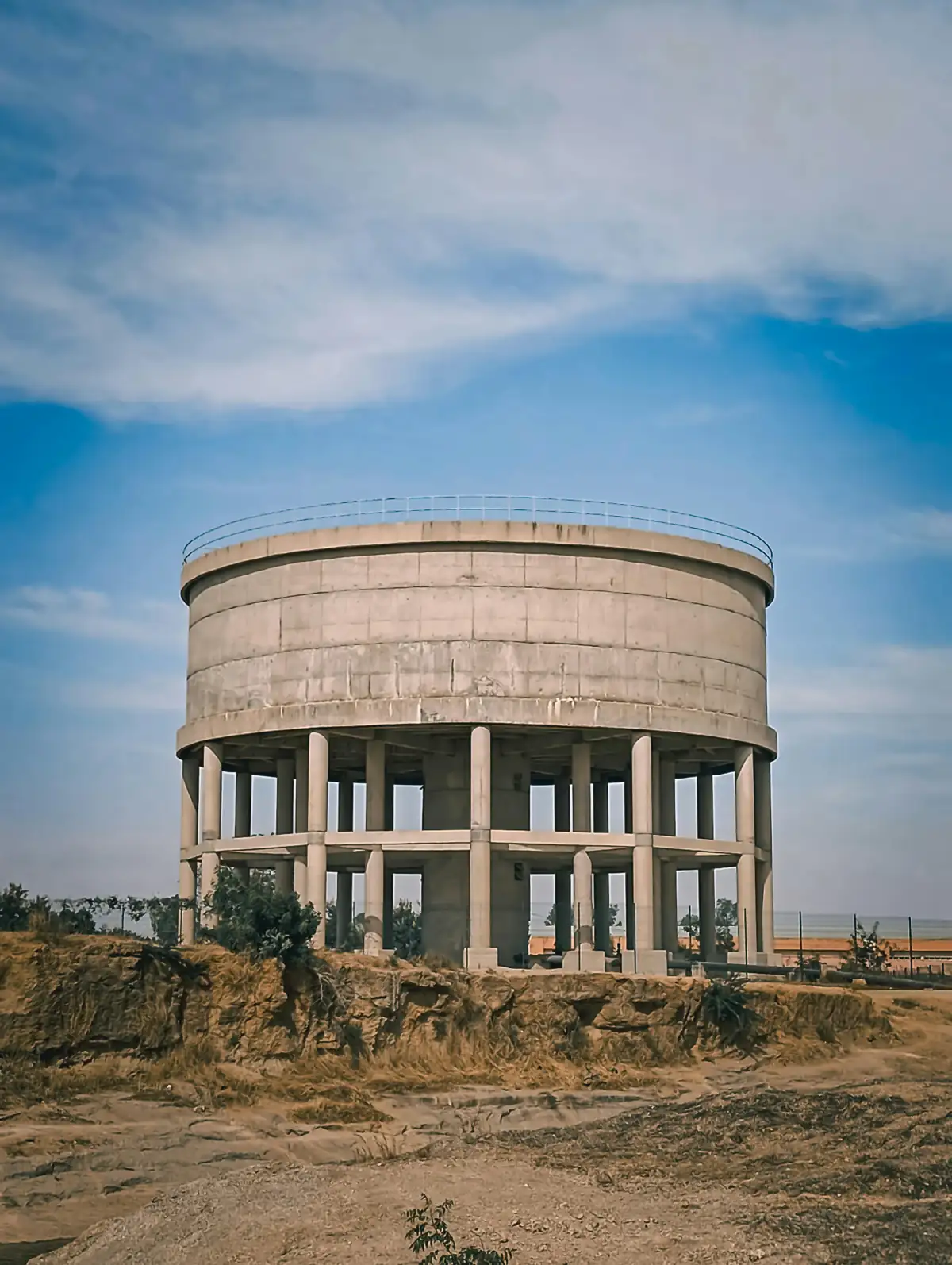
A water tank looks like a simple structure.
But in construction, it carries a serious responsibility.
A tank must hold water safely, resist leakage, support load, allow cleaning, manage overflow, and remain usable for years. Whether it is built for a home, farmhouse, college, hospital, commercial property, or campus, a water tank should not be treated as ordinary civil work.
An RCC water tank is a liquid-retaining structure. It needs proper planning, structural design, concrete quality, waterproofing, pipe coordination, access planning, and maintenance thinking.
For clients in Kolhapur, Panhala, and nearby areas, water tank construction should begin with one clear question:
How will this tank be used, maintained, and protected over time?
This guide explains what matters before constructing an RCC water storage structure.
Why water tank construction needs careful planning
A water tank is part of the property’s daily utility system.
If the tank fails, leaks, overflows, cracks, or becomes difficult to clean, the problem affects everyday use. A house may face water shortage. A farmhouse may become inconvenient. A college or hospital may face operational disturbance. A commercial site may face maintenance and hygiene issues.
Good water tank construction should consider:
- Water requirement
- Tank capacity
- Location
- Structural support
- Foundation
- RCC quality
- Waterproofing
- Inlet and outlet planning
- Overflow route
- Cleaning access
- Maintenance safety
- Leakage prevention
- Future repair access
The tank should not be placed wherever space is available. It should be planned as part of the full construction system.
Start with water requirement and tank capacity
The first step is understanding how much water the property needs.
Tank capacity should depend on actual use, not guesswork.
A small family home may need one type of storage. A farmhouse used occasionally may need a different arrangement. A college, hostel, hospital, sports facility, or campus may need larger storage because the daily number of users is higher.
Before finalizing capacity, the client should consider:
- Number of users
- Daily water demand
- Type of building
- Number of bathrooms
- Kitchen or canteen requirement
- Garden or landscape use
- Cleaning requirement
- Fire or emergency reserve, where applicable
- Water supply frequency
- Backup storage needs
- Future expansion
- Maintenance cycle
A tank that is too small creates water shortage. A tank that is too large without proper planning may increase cost and create maintenance issues.
Capacity planning should be practical and project-specific.
Decide the type of water tank
Water tanks can be planned in different ways depending on the project.
Common options include:
- Overhead water tank
- Underground water tank
- Ground-level water tank
- RCC water tank
- Plastic or prefabricated tank placed on structure
- Sump tank
- Institutional storage tank
- Farmhouse water storage tank
- Campus water tank
Each type has a different construction and maintenance requirement.
- An overhead tank needs strong structural support.
- An underground tank needs waterproofing, soil pressure consideration, and safe access.
- A ground-level RCC tank needs proper foundation and protection.
- A farmhouse tank may need independent water-source planning.
- An institutional tank may need larger capacity, access control, and maintenance scheduling.
The tank type should be selected after understanding water demand, site condition, structure, and maintenance access.
RCC water tanks are not ordinary concrete structures
RCC water tanks must retain water.
This makes them different from many other RCC elements.
A slab or beam mainly carries load. A water tank carries load and must also resist water leakage. The concrete, joints, reinforcement, pipe openings, internal surfaces, and waterproofing all become important.
Important RCC water tank concerns include:
- Water pressure
- Concrete quality
- Steel reinforcement
- Wall thickness
- Base slab design
- Construction joints
- Pipe penetrations
- Internal waterproofing
- External protection
- Crack control
- Curing
- Leak testing
- Maintenance access
This is why RCC tank work should be coordinated with a qualified engineer.
A water tank should not be built from casual assumptions or only past habit.
Location should be decided carefully
The location of a water tank affects construction cost, water pressure, plumbing route, structural load, cleaning access, and maintenance.
Before selecting the location, the team should consider:
- Water source
- Pump location
- Plumbing route
- Building structure
- Foundation condition
- Maintenance access
- Overflow discharge
- Safety
- Future expansion
- Distance from bathrooms and kitchen
- Electrical pump connection
- Site slope
- Space for cleaning
- Visibility and security
For farmhouses and open plots near Panhala, the tank may need planning around site levels, access, water source, and pump location.
For institutions, the tank should be located where it can serve the building efficiently without disturbing movement or future development.
For residential homes, the tank should not overload a poorly planned structure.
Tank location should be decided before construction reaches the service stage.
Foundation and structural support are critical
Water is heavy.
A water tank must be supported properly. The load is not only from concrete, steel, and finishing. The stored water itself creates significant load.
For RCC water tanks, the foundation or supporting structure should be designed and checked carefully.
Important structural checks include:
- Tank capacity
- Tank dimensions
- Base slab design
- Wall design
- Soil condition
- Foundation size
- Column support, if elevated
- Beam support
- Load transfer
- Settlement risk
- Access load
- Plumbing load
- Safety during maintenance
An overhead tank should not be placed on a structure that was not designed for it. An underground tank should not be built without considering soil pressure and water pressure. A ground-level tank should not be placed on weak or poorly prepared soil.
Structural planning protects the tank and the property around it.
Concrete quality affects leakage and durability
Concrete quality is one of the most important parts of RCC water tank construction.
Poor concrete may lead to cracks, honeycombing, leakage, weak surfaces, and durability problems. Since water tanks are constantly exposed to water from the inside, poor concrete work becomes visible over time.
Good concrete work requires:
- Correct mix or approved concrete grade
- Clean material
- Controlled water use
- Proper mixing
- Careful placement
- Proper compaction
- Avoiding honeycombing
- Good shuttering
- Proper finishing
- Continuous curing
- Protection during early strength development
Adding excess water to make concrete easier to place can damage quality.
Concrete should be workable, but not diluted carelessly.
Steel reinforcement should follow design
Reinforcement is essential in RCC water tank construction.
The steel helps control tension and supports the tank structure under water load. It must be placed according to the structural drawing.
Important reinforcement checks include:
- Correct bar diameter
- Correct bar spacing
- Proper cover
- Proper lap length
- Proper tying
- Additional reinforcement near corners or openings, where specified
- Steel position maintained during concrete placement
- Protection from displacement
- Engineer or supervisor checking before casting
Water tank reinforcement should not be changed casually on site.
Once concrete is poured, the reinforcement is hidden. This makes pre-casting inspection very important.
Shuttering affects tank shape and surface quality
Shuttering is the temporary mould used to shape concrete.
For water tanks, shuttering quality is especially important because the tank walls and base must be properly formed, aligned, and compacted.
Poor shuttering can cause:
- Leakage of cement slurry
- Uneven wall thickness
- Honeycombing
- Poor corners
- Bulging
- Misalignment
- Weak surfaces
- Extra repair work
- Difficulty in waterproofing
Before concrete is placed, shuttering should be checked for alignment, strength, sealing, cleanliness, and support.
The final tank quality depends partly on the temporary shuttering quality.
Construction joints need special attention
Many water tank leakage problems begin at joints.
A construction joint may occur where concrete is placed in stages. Pipe openings, wall-base connections, corner zones, and inlet or outlet points are also sensitive areas.
These areas need careful detailing and execution.
The site team should check:
- Joint location
- Joint treatment
- Waterproofing system
- Pipe sleeve placement
- Sealing around pipes
- Wall-to-base connection
- Corner treatment
- Surface preparation
- Cleaning before next concrete stage
- Leakage testing after completion
Joint planning should happen before work starts.
Waterproofing a poorly built joint later is more difficult than constructing it correctly in the first place.
Inlet, outlet, overflow, and cleaning access must be planned
A water tank needs more than walls and a slab.
It needs a working system for water entry, water exit, overflow, cleaning, and inspection.
The tank should include proper planning for:
- Inlet pipe
- Outlet pipe
- Overflow pipe
- Washout or drain line
- Ventilation, where required
- Inspection cover
- Cleaning access
- Pump connection
- Float valve or control system, where needed
- Safe access ladder or platform, where required
- Protection from contamination
- Overflow discharge point
Overflow should never be allowed to damage walls, foundations, terraces, or external areas.
Cleaning access should not be ignored. A tank that cannot be cleaned easily becomes a maintenance problem.
Pipe connections should be positioned and sealed properly because openings are common leakage points.
Waterproofing is not a finishing item
Waterproofing is central to water tank construction.
It should not be treated as a last-minute coating to cover poor construction. The best leakage prevention begins with proper design, good concrete, correct joints, careful pipe sealing, and proper curing.
Waterproofing may include:
- Integral waterproofing admixtures, where specified
- Joint treatment
- Internal waterproofing coating
- Pipe penetration sealing
- Corner treatment
- Surface preparation
- Curing before coating
- Water testing
- Repair of honeycombing before waterproofing
The waterproofing system should be selected according to tank type, water use, site condition, and technical recommendation.
For potable water tanks, materials should be suitable for water contact. This should be checked with the supplier, engineer, or waterproofing specialist.
A tank should be waterproofed to protect both water storage and the surrounding structure.
Curing is essential for RCC water tanks
Curing is the process of maintaining moisture in concrete during early strength development.
For water tanks, curing is especially important because cracks and weak concrete can lead to leakage and durability issues.
Curing should be planned for:
- Base slab
- Side walls
- Top slab, if any
- Columns or supports
- Joint areas
- Exposed concrete surfaces
The site team should not rush to waterproofing or finishing before the concrete has been properly cured and prepared.
Concrete needs time and care.
Leak testing should be done before regular use
Before a water tank is put into full use, it should be checked for leakage.
The method and duration of testing should be guided by the engineer or contractor based on the type of tank and project requirement.
Leak testing helps identify:
- Wall seepage
- Base leakage
- Joint leakage
- Pipe connection leakage
- Overflow issues
- Cracks
- Waterproofing defects
- External damp patches
If leakage appears, it should be corrected before the tank is connected for regular use.
A tank should not be handed over only because construction is complete. It should be checked for performance.
Underground water tanks need additional planning
Underground tanks have different challenges.
They are surrounded by soil. They may face groundwater pressure, soil pressure, surface water entry, and access limitations.
Important underground tank considerations include:
- Excavation safety
- Soil condition
- Base preparation
- Structural design
- Waterproofing from inside and outside, where needed
- Protection from surface runoff
- Manhole access
- Cleaning access
- Ventilation
- Pump placement
- Overflow and drain arrangement
- Backfilling method
- Protection from vehicle load, if nearby
- Safety around opening
An underground tank should be built so that it can be accessed, cleaned, and maintained safely.
If it is placed near driveways or parking areas, load considerations become important.
Overhead water tanks need structural support
Overhead tanks create load at height.
They should only be placed on a properly designed structure. The supporting columns, beams, slab, or staging must be suitable for the tank capacity and location.
Important overhead tank considerations include:
- Tank capacity
- Structural support
- Column and beam design
- Load transfer
- Access ladder
- Safety railing, where required
- Overflow route
- Plumbing connection
- Waterproofing
- Maintenance access
- Protection from leakage onto roof
- Pump system
- Cleaning access
An overhead tank should not be added casually after the building is complete unless the structure is checked.
This is especially important for homes, institutions, and commercial buildings where future water demand may increase.
Farmhouse water tanks need practical site planning
Farmhouses often need independent water planning.
A farmhouse near Panhala or Kolhapur may depend on borewell water, well water, tanker supply, rainwater storage, or a combination of sources. The water tank should be planned according to how frequently the property is used and how reliable the water source is.
Farmhouse tank planning should consider:
- Water source
- Storage capacity
- Pump location
- Distance from house
- Garden or outdoor use
- Animal or farm use, if any
- Security
- Cleaning access
- Overflow direction
- Site slope
- External drainage
- Power backup for pump
- Future expansion
A farmhouse tank should be easy to access and maintain, especially if the property is not occupied every day.
Institutional water tanks need reliability
Colleges, hospitals, hostels, sports facilities, and campuses need dependable water storage.
For institutions, a water tank is not just a construction item. It is part of daily operations.
Institutional tank planning should consider:
- Daily user count
- Peak water demand
- Emergency storage
- Cleaning schedule
- Multiple connection points
- Pump system
- Maintenance access
- Overflow management
- Safety around tank area
- Structural reliability
- Waterproofing
- Future expansion
- Service coordination
JVS Enterprises has completed an 8000-litre water tank project for D.Y. Patil Agriculture College, Talsande, based on the portfolio information provided. This kind of project experience is relevant because institutional water storage needs stronger planning than a small residential tank.
For institutions, tank failure can disturb daily functioning. Reliability matters.
Water tank construction and monsoon conditions
In Kolhapur and Panhala, monsoon conditions should be considered during water tank construction.
Rain can affect excavation, concrete placement, curing, waterproofing, material storage, and site safety.
The contractor should plan:
- Cement storage
- Water removal from excavation
- Protection of fresh concrete
- Safe access
- Shuttering stability
- Waterproofing timing
- Overflow discharge
- Drainage around the tank
- Worker safety
- Backfilling after underground tank work
Water tank construction should not be rushed during unsuitable weather conditions.
A responsible contractor adjusts work sequence to protect quality.
Maintenance access should be designed, not improvised
A water tank will need inspection and cleaning.
If access is not planned, maintenance becomes difficult and unsafe.
A good tank should allow:
- Safe inspection
- Safe cleaning
- Access to inlet and outlet points
- Access to overflow pipe
- Access to pump connection
- Access to manhole or cover
- Leakage inspection
- Valve maintenance
- Drain or washout use
- Safe ladder or platform, where required
A tank that is difficult to maintain will eventually create problems.
Maintenance access should be part of the design.
Common mistakes in water tank construction
Many water tank problems begin with preventable mistakes.
Mistake 1: Choosing capacity without calculation
Tank capacity should be based on actual users, water demand, supply frequency, and future needs.
Mistake 2: Building without structural design
RCC water tanks must be designed for water load, tank shape, support, and site condition.
Mistake 3: Poor concrete quality
Weak or poorly compacted concrete can lead to cracks, leakage, and durability issues.
Mistake 4: Ignoring construction joints
Joints are common leakage points. They should be planned and treated carefully.
Mistake 5: Poor pipe sealing
Inlet, outlet, overflow, and drain pipes must be positioned and sealed properly.
Mistake 6: Treating waterproofing as a cover-up
Waterproofing cannot fully compensate for poor RCC work, weak joints, or honeycombing.
Mistake 7: No overflow planning
Overflow water should be discharged safely without damaging walls, roofs, foundations, or nearby areas.
Mistake 8: No cleaning access
A tank without proper access becomes difficult to maintain.
Mistake 9: Placing overhead tanks without structural checking
Tank loads are significant. Structural support must be verified before placement.
Mistake 10: Skipping leak testing
The tank should be checked before regular use.
Quality checklist for RCC water tank construction
Clients can use this checklist during planning and execution:
- Is the water requirement calculated?
- Is the tank capacity practical?
- Is the tank location finalized?
- Is structural design available?
- Is the foundation or support checked?
- Is reinforcement placed as per drawing?
- Is shuttering strong and aligned?
- Is concrete quality controlled?
- Is compaction done properly?
- Are construction joints treated?
- Are pipe sleeves planned before casting?
- Are inlet, outlet, overflow, and drain lines included?
- Is waterproofing specified?
- Is curing planned?
- Is cleaning access provided?
- Is overflow discharge safe?
- Is leak testing planned before handover?
- Is future maintenance considered?
This checklist does not replace engineering supervision, but it helps clients ask the right questions.
Choosing a water tank contractor in Kolhapur or Panhala
Before selecting a contractor for water tank construction, clients should ask:
- Has the contractor handled RCC water tank work before?
- Will the tank be built according to structural design?
- How will leakage prevention be handled?
- How will joints and pipe openings be sealed?
- What waterproofing system will be used?
- How will curing be managed?
- How will the tank be tested?
- Will cleaning access be provided?
- How will overflow be discharged?
- Can the contractor also handle related RCC, plumbing, drainage, and site development work?
A good contractor should explain the tank as a complete storage structure, not only as concrete work.
JVS Enterprises and RCC water tank work
JVS Enterprises provides RCC water tank construction and related civil work for residential, farmhouse, institutional, commercial, and campus projects in Kolhapur and Panhala.
Based on the project portfolio provided, JVS Enterprises has completed an 8000-litre water tank for D.Y. Patil Agriculture College, Talsande. The company also handles RCC work, foundation work, site development, drainage work, compound wall construction, residential construction, farmhouse construction, and institutional construction.
This matters because water tank construction is connected to many other parts of a property.
- A water tank may need structural support.
- Support may need RCC work.
- RCC work may need waterproofing.
- Waterproofing may depend on joint quality.
- Overflow may need drainage planning.
- Drainage may connect to site development.
- Maintenance access may affect the final layout.
A construction company that understands these connections can plan water storage more responsibly.
Final thoughts
A water tank is not only a storage container.
It is a working part of the building.
A well-built RCC water tank should be properly sized, structurally sound, carefully reinforced, well concreted, correctly waterproofed, accessible for cleaning, safely connected, and protected from leakage.
For homes, farmhouses, colleges, hospitals, campuses, and commercial properties in Kolhapur and Panhala, water tank construction should be handled with planning and technical discipline.
The tank may not be the most visible part of the property.
But when it works well, the entire property functions better.
Frequently asked questions
What is an RCC water tank?
An RCC water tank is a reinforced cement concrete structure designed to store water. It uses concrete and steel reinforcement to form a water-retaining structure such as an overhead tank, underground tank, sump, or ground-level storage tank.
Why is waterproofing important in RCC water tank construction?
Waterproofing is important because water tanks must retain water without leakage. Waterproofing should work together with good concrete quality, proper joint treatment, pipe sealing, curing, and leak testing.
What should be checked before constructing a water tank?
Before constructing a water tank, check water demand, tank capacity, location, structural support, foundation, reinforcement, inlet, outlet, overflow, cleaning access, waterproofing, curing, and maintenance requirements.
Is structural design required for an RCC water tank?
Yes. RCC water tanks should be designed with proper technical input because they carry water load and must resist leakage. The design depends on tank capacity, shape, location, support, and site condition.
What causes leakage in RCC water tanks?
Leakage can be caused by poor concrete quality, honeycombing, cracks, weak construction joints, poor pipe sealing, inadequate waterproofing, poor curing, or structural movement.
Does JVS Enterprises handle RCC water tank construction in Kolhapur?
Yes. JVS Enterprises handles RCC water tank construction, RCC work, waterproofing coordination, foundation work, drainage work, site development, residential construction, farmhouse construction, and institutional construction in Kolhapur, Panhala, and nearby areas.
Need help turning this insight into a practical project plan?
JVS Enterprises provides RCC water tank construction, overhead and underground water storage work, RCC work, waterproofing coordination, foundation work, drainage work, farmhouse site development, institutional construction, compound wall construction, and turnkey construction services.
Start a Project Conversation